Urban ecology
The Hidden Life of City Trees
They are easy to treat as decoration. In practice, trees quietly reshape the temperature, rhythm, and resilience of an entire street.
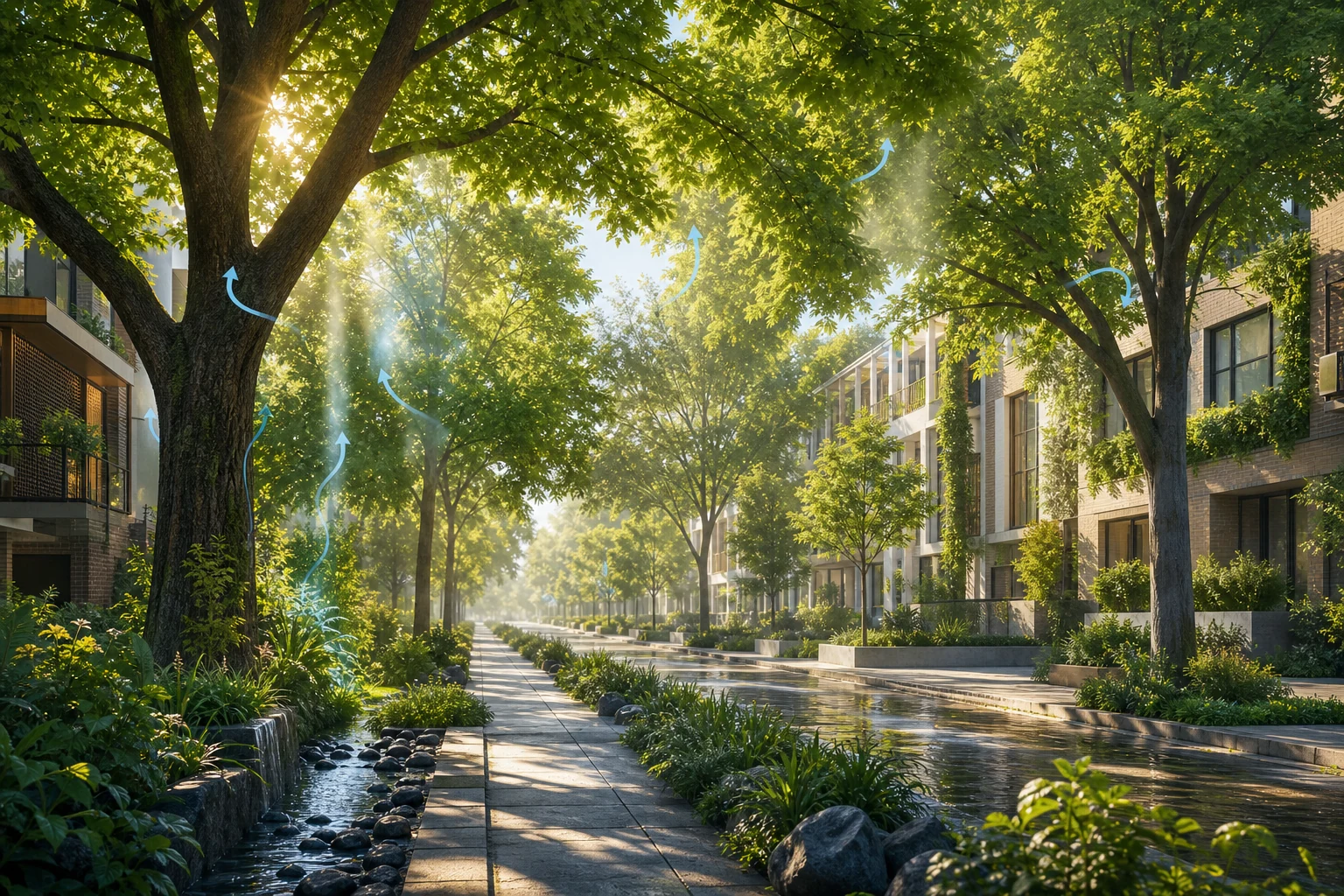
At noon, the difference between two neighboring streets can feel immediate. One reflects heat from bare pavement; the other is softened by leaves, shade, and moisture. The trees are not merely standing there. They are continuously exchanging water and energy with the atmosphere.
A quiet form of infrastructure
Roots make space for water to enter the soil, while branches intercept rainfall before it reaches the ground. Leaves release moisture through evapotranspiration, an almost imperceptible process that cools the air around them. Together, these effects can mitigate heat and slow runoff during a sudden storm.
The benefit depends on more than the number of trunks. A contiguous canopy shades a useful stretch of pavement, but isolated trees may struggle to influence the wider street. Species diversity also matters. A varied urban forest is more resilient when insects, drought, or disease threaten a particular kind of tree.
Growing at the pace of a city
Urban trees need time, suitable soil, and patient stewardship. Their roots must coexist with pipes, foundations, and crowded sidewalks. Young trees may look modest for years before their crowns expand enough to transform the experience of walking beneath them.
This slow timetable can make planting feel less urgent than other public works. Yet the delay is precisely why early action matters. A tree planted today begins adapting to its site immediately, building the structure that a neighborhood will rely on decades later.
Learning to notice
The next time you cross a hot block, notice where people pause and which route feels comfortable. Look for birds, insects, wet soil, and the changing pattern of light. These small observations reveal how biodiversity and daily life overlap. A city canopy is not scenery added after the important work is finished; it is part of the work itself.